The College of Nursing (CoN) at King Hamad Institute of Nursing and Associated Medical Sciences (KHINAMS), Islamabad, successfully conducted a comprehensive FDP from December 29 to January 1, 2026 to enhance pedagogical skills and professional competencies among nursing educators. The program featured expert facilitators who delivered engaging sessions on critical aspects of academic excellence and professional communication. The session was accompanied by the Nursing faculty from KHINAMS and AFPGMI.
The program commenced with Ms. Amna Karim, Lecturer in English, who provided valuable insights into the appropriate structure of language in academic contexts. Her session focused on commonly misused and mispronounced words in professional settings, helping faculty members refine their communication skills.
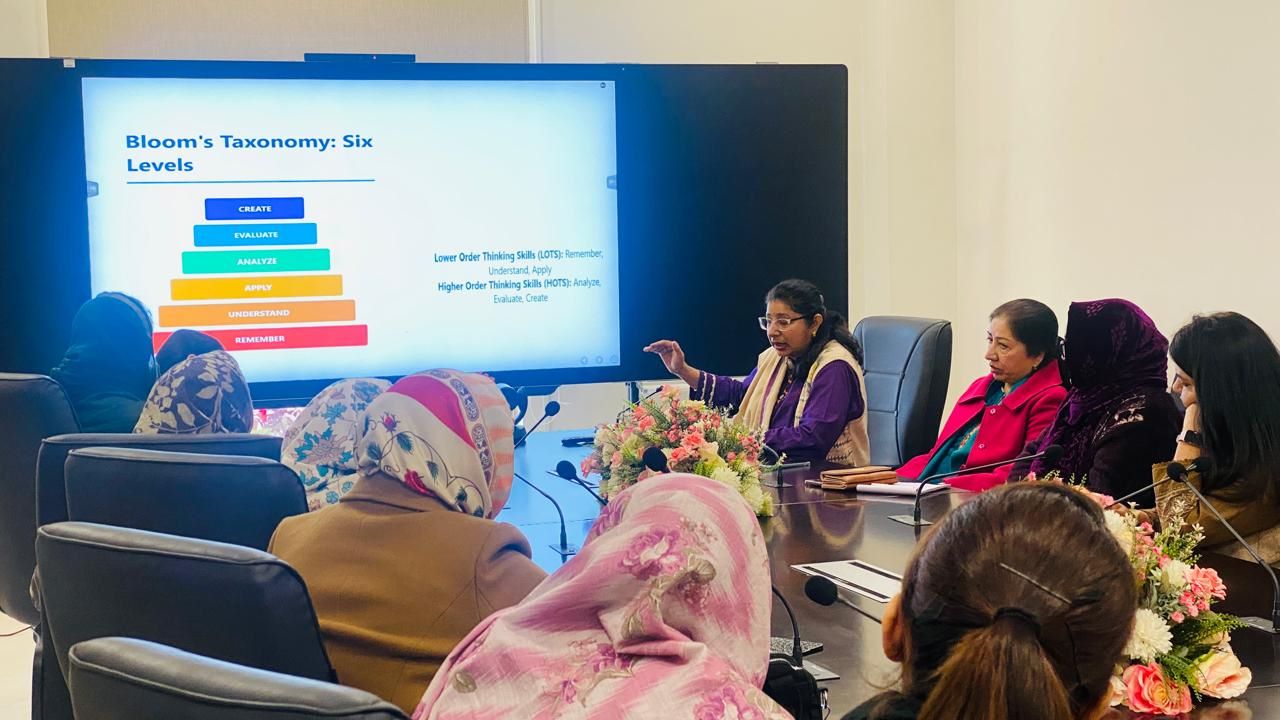
Dr. Zahra Ladhani, Dean and Professor of Nursing, delivered an illuminating presentation on Bloom's Taxonomy, a foundational framework for designing learning objectives and assessments. Her expertise in nursing education enabled her to contextualize this pedagogical tool specifically for nursing curricula. Dr. Ladhani demonstrated how faculty could utilize different cognitive levels to create more meaningful learning experiences for students, encouraging critical thinking and higher-order cognitive skills development.
Ms. Hamna Rao-Lecturer ICT contributed significantly by guiding participants through the functionalities of Content Management Systems (CMS), Learning Management Systems (LMS), and Online Assessment Systems (OAS). Her hands-on demonstration equipped faculty members with practical skills to effectively manage course content, facilitate online learning, and conduct fair assessments using technology.
Dr. Misbah Obaid, Assistant Professor English, concluded the formal presentations with an insightful session on technical writing in professional settings. She emphasized the importance of clear, concise, and structured writing for academic publications, research proposals, and professional correspondence. Her guidance on technical writing conventions will assist faculty members in their scholarly pursuits and enhance the quality of their academic output.
The program concluded with remarkable faculty involvement and participation in hands-on activities covering the various topics presented throughout the day. These interactive sessions allowed participants to apply newly acquired knowledge immediately, fostering deeper understanding and retention. Faculty members actively engaged in group discussions, collaborative exercises, and practical demonstrations, creating a dynamic learning environment.
.jpg)
.jpg)
.jpg)
.jpg)
.jpg)