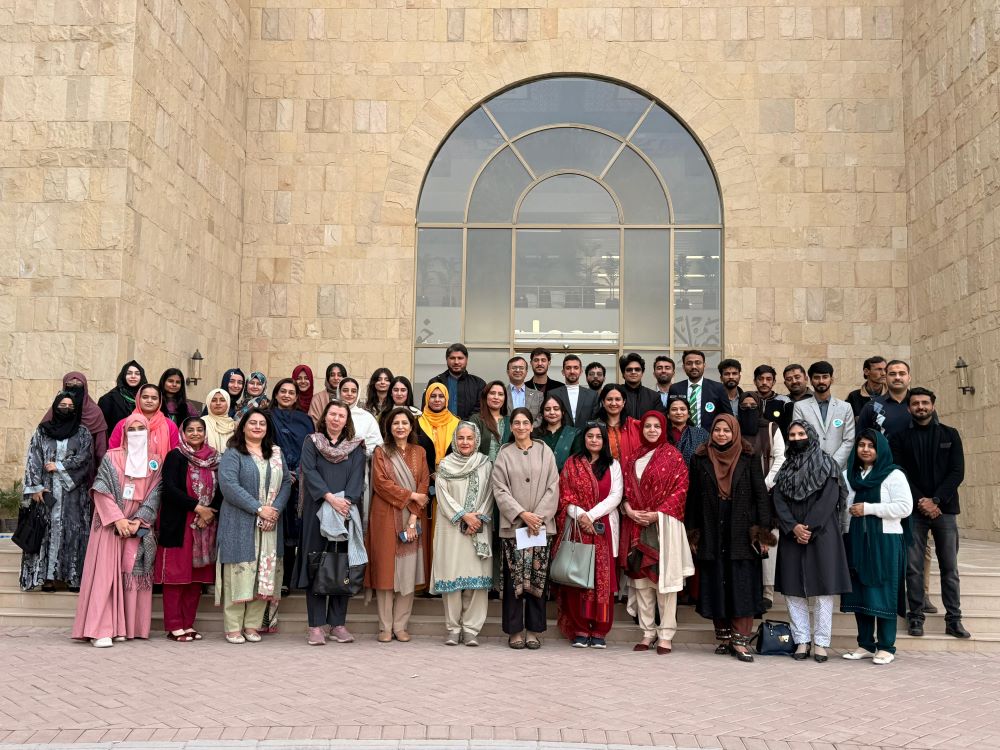
The National University of Medical Sciences (NUMS) celebrated five years of Environmental Stewardship at NUMS, in continuation of the NUMS Decade Celebrations. An event was hosted at King Hamad Institute of Nursing and Allied Medical Sciences (KHINAMS) on December 15, 2025, to acknowledge the contributions of all stakeholders, including NUMS students, faculty and staff, and NUMS leadership. Efforts towards environmental sustainability were initiated in January 2021, when the first formal awareness session on Zero-Waste (ZW) practices was conducted. NUMS became the first university in Pakistan to officially adopt a ZW pledge and policy and implement a ZW program, achieving marked reduction in campus waste. NUMS achieved many milestones ever since, including the launch of Zero Waste Alliance Pakistan (ZWAP), an academia-led alliance in collaboration with leading universities from across the country. NUMS is the first organizational affiliate of the Zero Waste international Alliance (ZWIA) from Pakistan and a strategic partner of the Global Zero Waste forum (ZWF).
Through these initiatives, NUMS has realized tangible sustainability benefits, including reduced landfill waste, improved waste segregation and recycling practices, enhanced resource efficiency, and increased environmental awareness across its campuses. Institutional adoption of Zero-Waste practices has strengthened sustainable consumption behaviors, fostered community participation, and embedded environmental responsibility within healthcare education and practice.
The event was organized and co-hosted by the NUMS Office of Environmental Stewardship, the NESC team led by Dr. Rabail Zahra Raza, and the GYM Club team led by their captain, Rehan Tariq. The ceremony commenced with the recitation of the Holy Quran by Rafique Khosa, followed by the national anthem. Dr. Misbah Obaid, Syeda Ayesha Mansoor, and Annas Awais moderated the event. Brig. Ambreen, CEO of KHINAMS, graced the occasion as the Chief Guest. Deans Prof. Dr. Aisha Mohiuddin and Prof. Dr. Shazia Khalid joined as Special Guests in acknowledgement of their pivotal role in supporting campus green initiatives.
Dr. Adeela Bashir gave an overview of Project ZW, NUMS’s flagship project, and how it evolved. Dr. Hina Shan highlighted NUMS’s global engagement for environmental health and collaboration with organisations such as the Global Consortium on Climate and Health Education (GCCHE) , Global Climate and Health Alliance (GCHA), Planetary Health Alliance (PHA). Dr. Aman Karim gave an overview of ZWAP and collaboration with international ZW organizations. Dr. Tamkeen Jafri briefed on ongoing efforts towards implementation of ZW management at KHINAMS, while Minal Abid highlighted GYM Club contributions. Students from the Dramatic Society and GYM Club performed thought-provoking skits which resonated deeply with the audience. The event also featured an exhibition showcasing students’ projects based on ZW and other environmental aspects, reflecting student-led innovation aligned with sustainability and planetary health principles.
Celebrating 5 Years of Environmental Stewardship at NUMS
A key highlight of the day was the distribution of certificates to the members of the Green Office, NESC, GYM Club, and the representatives of Communications and Marketing, Digital Technologies, and Administration directorates, and the housekeeping staff, as a token of gratitude and appreciation for their contributions. Housekeeping staff was given a standing ovation for their tireless efforts in implementing waste segregation protocols at the NUMS PWD campus, reinforcing the role of operational staff in achieving institutional sustainability goals. Dr. Shazia Khalid shared her thoughts, and Dr. Ayesha Rauf, Patron NESC, gave a note of thanks to NUMS leadership, deans, and all directorates for unwavering support throughout. The Chief Guest commended the efforts of all stakeholders towards environmental conservation.
The event concluded with a call to action for all students and faculty to continue their efforts in making NUMS a model of environmental excellence and contribute towards achieving the United Nations Sustainable Development Goals (UN SDGs), especially SDG 12 (Responsible Consumption and Production) through waste reduction and responsible resource use, SDG 13 (Climate Action) by minimizing environmental footprint and promoting climate-conscious practices, and SDG 17 (Partnerships for the Goals) through sustained national and international collaborations.
.jpg)
.jpg)
.jpg)
.jpg)
.jpg)