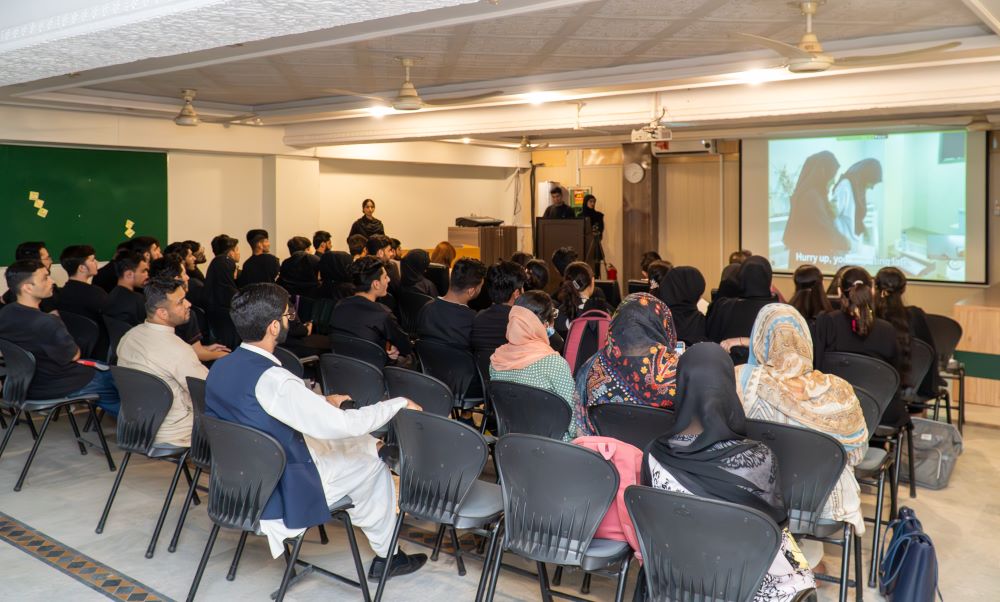
On 18 April 2025, Students from PAFIIC, NUMS organized an academic seminar entitled "Ethical Dimensions in Managing Chronic and Common Illnesses." This event served as a vital platform to explore the practical application of ethical principles in healthcare, particularly in long-term and frequently encountered medical conditions. The seminar aimed to strengthen ethical awareness among future healthcare professionals by integrating clinical reasoning with moral accountability through scenario-based learning.
The seminar was supervised by Dr. Muhammad Shehroz Aamir (Course Instructor, Chronic and Common Illnesses) and Ms. Saira Javed (Course Instructor, Professional Ethics). Five student-led video presentations formed the session's core, each depicting ethically challenging situations in managing chronic or common medical conditions. These video projects addressed real-world ethical issues grounded in three key thematic areas: patient-centered communication, respect for patient autonomy, and applying the five foundational principles of medical ethics—autonomy, beneficence, non-maleficence, justice, and fidelity.
Each presentation followed a structured format, beginning with a portrayal of unethical clinical conduct, such as breach of confidentiality, coercion, bias in care delivery, or failure to ensure informed consent. These were followed by a reformed approach demonstrating appropriate ethical behavior. This narrative juxtaposition effectively highlighted the contrast between malpractice and professional accountability, allowing attendees to analyze and reflect upon ethical decision-making in practice critically.
The medical conditions selected for discussion, such as skin allergies, anaphylactic reactions, and other prevalent chronic illnesses, served as relatable and contextually relevant cases. These scenarios emphasized the psychosocial, emotional, and systemic challenges involved in long-term care, such as patient adherence, continuity of treatment, and holistic support. The seminar successfully bridged the gap between theoretical ethics and everyday clinical realities through this approach:
The seminar was honored by the presence of distinguished guests: Brig. Shoaib Kiani SI(M) (Retired.) and Prof. Dr. Aamir Shahzad (Director Academics Clinical, NUMS) as Chief Guests, and Prof. Dr. Shazia Khalid (Dean SSH and Head, Department of Psychology, NUMS) as Guest of Honor. Their participation added prestige and institutional significance to the event.
The seminar concluded with active audience participation and reflective dialogue, affirming the effectiveness of visual, scenario-based pedagogy in enhancing ethical competence. By combining clinical education with ethical discourse, the event underscored the indispensable role of ethics in ensuring responsible and compassionate healthcare delivery.
.jpg)
.jpg)
.jpg)
.jpg)
.jpg)